To increase website traffic for a small business, focus on the channels that compound: SEO and content (organic search drives 53% of all traffic), your Google Business Profile (a complete one gets 70% more visits), and social and email to bring visitors back.
Businesses that blog get 55% more traffic. Consistency beats quick tricks traffic built the right way keeps growing.A great website is useless if nobody visits it. For most small businesses, the challenge isn’t building a site it’s getting a steady stream of the right people to it.
The good news is that increasing website traffic doesn’t require gimmicks or a huge budget; it requires focusing on a few proven channels and being consistent. This guide shows you exactly how to increase website traffic for a small business, with practical tactics you can start today.
This guide is part of our wider playbook on digital marketing for small businesses. Here we focus on driving traffic.
Where website traffic actually comes from
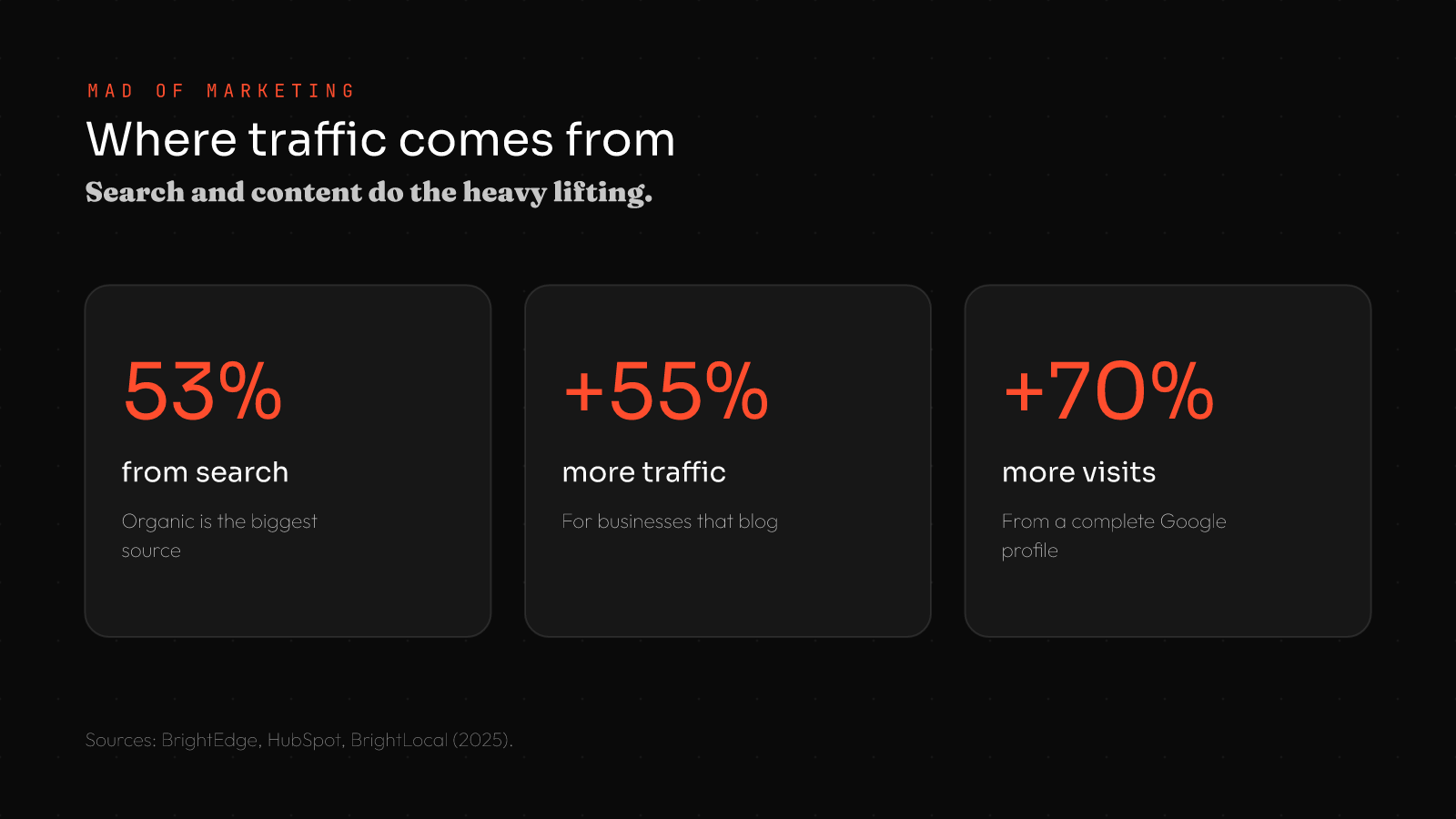
Knowing the biggest sources tells you where to focus:
- Search dominates: Organic search drives about 53% of all website traffic more than every other channel combined.
- Content multiplies it: Businesses that blog get around 55% more traffic and far more indexed pages for search to find.
- Local search sends visitors: A complete Google Business Profile drives about 70% more visits for local businesses.
- Page one is everything: 75% of users never scroll past the first page of Google, so ranking well is essential.
How to increase website traffic in 5 steps
Prioritize the channels that compound over time. Here’s the order.
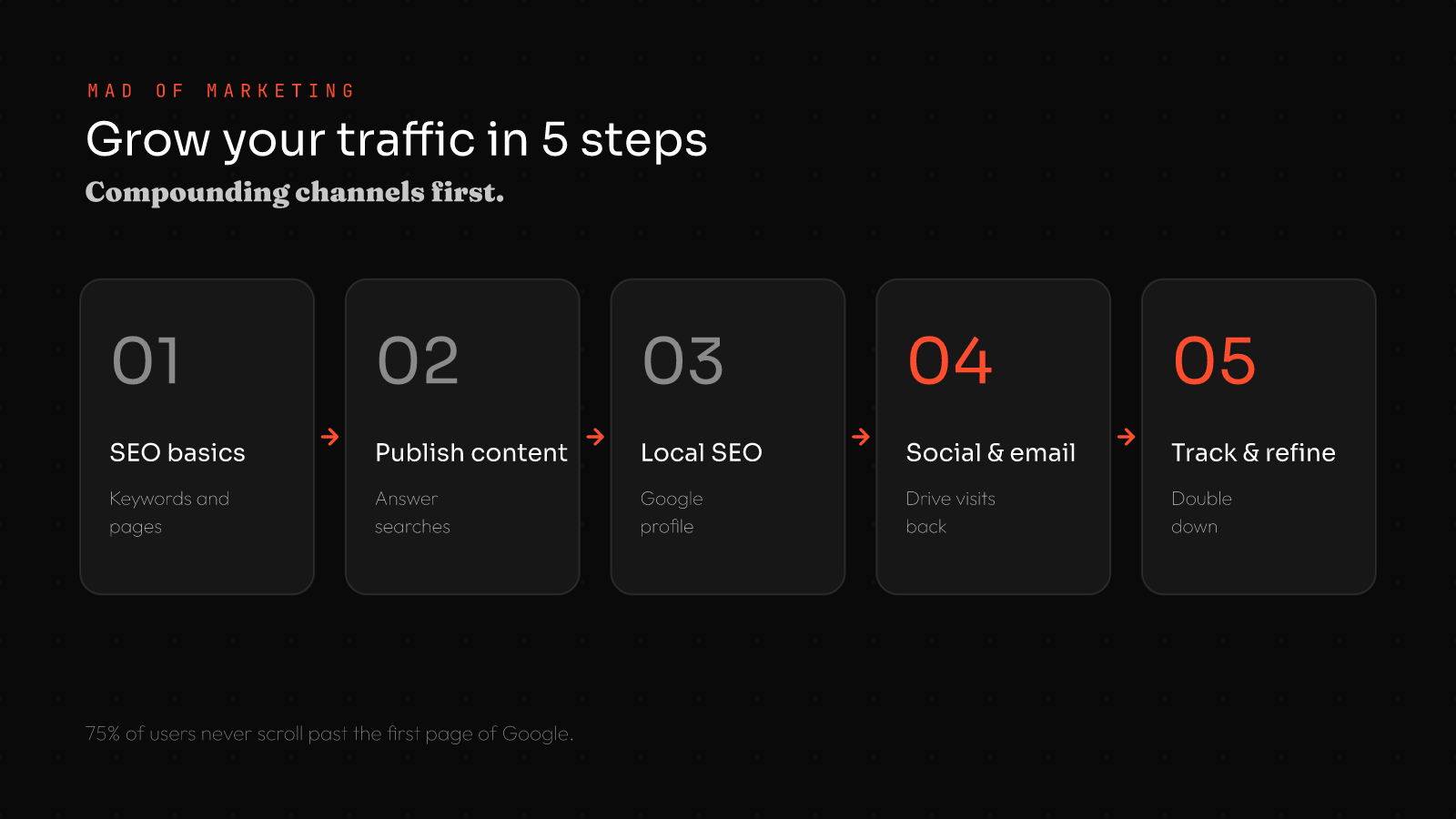
1. Nail your SEO basics
Since search drives the most traffic, SEO is the foundation. Research the keywords your customers search, optimize your page titles and content around them, make sure your site is fast and mobile-friendly, and fix technical issues. Getting the basics right helps every page rank better.
2. Publish helpful content
Content is how you rank for more searches and give people reasons to visit. Answer your customers’ questions in blog posts, guides, and videos each useful piece is another entry point from search. Content marketing compounds, bringing in traffic for years after you publish.
3. Optimize for local search
If you serve a local area, local SEO is a fast traffic win. Complete your Google Business Profile, target location-based keywords, and earn reviews you’ll capture high-intent “near me” searchers and drive them to your site.
4. Use social and email to drive visits
Bring people back to your site with channels you control. Share your content on social media and in your email newsletter, always linking back. These owned and organic channels drive repeat traffic at no media cost.
5. Track and refine
Measure what’s working so you can do more of it. Use Google Analytics and Search Console to see which pages and channels drive traffic and conversions, then double down on winners and fix underperformers. Data turns traffic growth from guesswork into a system.
10 more ways to increase website traffic
Beyond the core five, here are additional tactics that bring in visitors:
- Target long-tail keywords: Specific, lower-competition phrases are easier to rank for and bring high-intent visitors.
- Update and improve old pages: Refreshing existing content can boost rankings and traffic quickly.
- Build internal links: Linking your pages together helps visitors and search engines navigate your site.
- Earn backlinks: Links from reputable sites boost your authority and rankings.
- Start a YouTube channel: YouTube videos rank in search and drive traffic to your site.
- Answer questions in communities: Be helpful in forums and groups, linking back where relevant.
- Run targeted ads: Google Ads drive immediate, high-intent traffic while SEO builds.
- Guest post on relevant sites: Reach new audiences and earn backlinks.
- Optimize for featured snippets: Answer questions directly to win position-zero traffic.
- Add clear calls to action in content: Turn the traffic you earn into leads and sales.
Free vs paid traffic
There are two ways to grow traffic, and the best strategy uses both. Free (organic) traffic from SEO, content, local search, social, and email costs time rather than money and compounds, becoming a durable asset that keeps sending visitors for years. It’s slower to build but far cheaper long-term.
Paid traffic from Google and social ads delivers visitors immediately and predictably, which is ideal when you need results now or want to test an offer, but it stops the moment you stop paying. For most small businesses, the smart play is to build organic traffic as your long-term foundation while using a modest paid budget to drive immediate visitors and fill gaps. As your organic traffic grows, your reliance on paid shrinks and your cost per visitor falls.
Win traffic faster with long-tail keywords
If you want to increase website traffic quickly, long-tail keywords are your best friend especially for a newer or smaller website. Long-tail keywords are longer, more specific phrases (like “affordable wedding photographer in [city]” rather than just “photographer”). They have lower search volume individually, but two big advantages make them ideal for small businesses.
First, they’re far easier to rank for you’re competing against fewer, less-established sites, so you can realistically reach page one instead of being buried under big brands. Second, they carry higher intent someone searching a specific phrase usually knows exactly what they want and is closer to buying, so the traffic converts better. Collectively, targeting many long-tail keywords adds up to significant, high-quality traffic.
The strategy is simple: identify the specific questions and phrases your customers use (Google autocomplete and “People also ask” are goldmines), then create a page or post that thoroughly answers each one.This is how small businesses build search traffic without competing head-on with established competitors for impossible head terms start specific, win those rankings, and expand from there.
Turn traffic into customers
More traffic only matters if it turns into business, so don’t stop at driving visits make sure your site converts them. It’s a common and costly mistake to pour effort into traffic while ignoring what happens once people arrive. Once visitors land, guide them toward action: make it instantly clear what you offer, include prominent calls to action, add trust signals like reviews and testimonials, and make it easy to contact or buy.
Capture visitors who aren’t ready to buy today by offering something valuable in exchange for their email, so you can follow up. This is where traffic growth meets conversion rate optimization and the two together are far more powerful than either alone.
Doubling your traffic and doubling your conversion rate quadruples your results. So as you work to increase website traffic, keep one eye on conversion: the goal isn’t visitors for their own sake, it’s the customers and revenue that traffic can produce.
Common website traffic mistakes
- Ignoring SEO: Skipping the channel that drives the most traffic.
- Publishing inconsistently: A few posts then silence, so content never compounds.
- Chasing quick tricks: Gimmicks and shortcuts that don’t last (or get penalized).
- Not tracking: Not knowing which channels actually drive traffic.
- A slow or unclear site: Driving traffic to a page that doesn’t load or convert.
- Relying on one channel: Depending entirely on social or ads instead of building compounding traffic.
How to track your website traffic
You can’t grow what you don’t measure, so tracking your traffic is essential and the core tools are free. Google Analytics 4 shows how many people visit your site, where they come from (search, social, direct, referral), which pages they view, and what they do including whether they convert.
Google Search Console reveals which search queries bring you traffic, your average ranking positions, click-through rates, and any technical issues holding you back.Together, these two free tools give you a complete picture of your traffic and where it comes from. Check them regularly and watch a few key things: which channels drive the most visitors, which pages attract the most traffic, which keywords you rank for (and which are close to page one and worth a push), and most importantly which traffic actually converts into leads or sales.
This data turns traffic growth from guesswork into a system: you double down on the channels and content that work, fix what underperforms, and spot new opportunities.A business that tracks its traffic and acts on the data will consistently outgrow one that publishes blindly and hopes.
Frequently asked questions
How can a small business increase website traffic?
Focus on the channels that compound: SEO and helpful content, local SEO and your Google Business Profile, and social and email to drive repeat visits. Businesses that blog get about 55% more traffic, and organic search drives the majority of all website traffic.
How do I get website traffic for free?
Use SEO, content marketing, your Google Business Profile, organic social media, and email. These free channels cost time rather than money and compound over the long term, becoming a durable source of visitors.
How long does it take to increase website traffic?
Paid ads drive traffic immediately, but organic channels like SEO and content typically take 3–6 months to gain momentum, then compound. Consistency is key traffic built the right way keeps growing over time.
Why is my website getting no traffic?
Common reasons include weak or missing SEO, little content for search to find, no local optimization, or a slow site. Start by fixing your SEO basics and publishing helpful content targeting what your customers search.
What is the fastest way to get website traffic?
Paid advertising Google Ads or social ads drives traffic immediately by putting you in front of people searching or a targeted audience. It’s the quickest option, but it stops when you stop paying, so pair it with SEO and content that build lasting, compounding traffic over time.
How do long-tail keywords help a small business?
Long-tail keywords are specific, lower-competition phrases that are much easier for a small site to rank for, and they carry higher buyer intent so they convert better. Targeting many of them adds up to significant, high-quality traffic without competing against big brands for broad head terms.
The bottom line on how to increase website traffic for small business
Increasing website traffic isn’t about tricks it’s about consistently working the channels that compound. Nail your SEO basics, publish helpful content, optimize for local search, use social and email to drive repeat visits, and track what works. Add long-tail keywords, backlinks, and a modest ad budget to accelerate. Build traffic the right way and it keeps growing turning your website into a steady source of visitors and customers.
Want a plan to grow your traffic and turn it into customers? Book a free strategy call or explore our services.
Sources: BrightEdge, HubSpot, BrightLocal traffic and SEO statistics (2025). Figures are industry averages and vary by source.