Lead generation for small business is the system that turns attention into qualified prospects, and then into customers. The average small-business lead costs about $146, but the biggest lever isn’t cost, it’s speed: contact a lead within 5 minutes and you’re up to 100× more likely to qualify it. Most businesses take 42 hours. That gap is where the money is.
Plenty of small businesses obsess over getting more leads while quietly wasting the ones they already have. The data is brutal: the average response time to a new lead is 42 hours, and only about a quarter of companies follow up within the first hour.
Meanwhile, leads contacted within five minutes are dramatically more likely to convert. Lead generation for small business isn’t only about volume, it’s about building a system that captures and responds fast.
This guide is part of our wider playbook on digital marketing for small businesses. Here we focus on generating, and converting, leads.
What is lead generation for small business?
Lead generation for small business is the process of attracting potential customers and capturing their contact details so you can follow up and turn them into paying clients.
A “lead” is anyone who’s shown interest, filled in a form, called, messaged, downloaded a guide, or booked a consultation. Lead gen is the bridge between marketing (getting attention) and sales (closing the deal).
It has two halves people often confuse: generating the lead (the channels and offers that bring people in) and converting it (the follow-up that turns interest into revenue). Win at both, or the leads you pay for leak away.
Lead generation channels and what they cost
Cost per lead varies enormously by channel. Here’s how the common ones compare for small businesses, directional benchmarks, not guarantees.
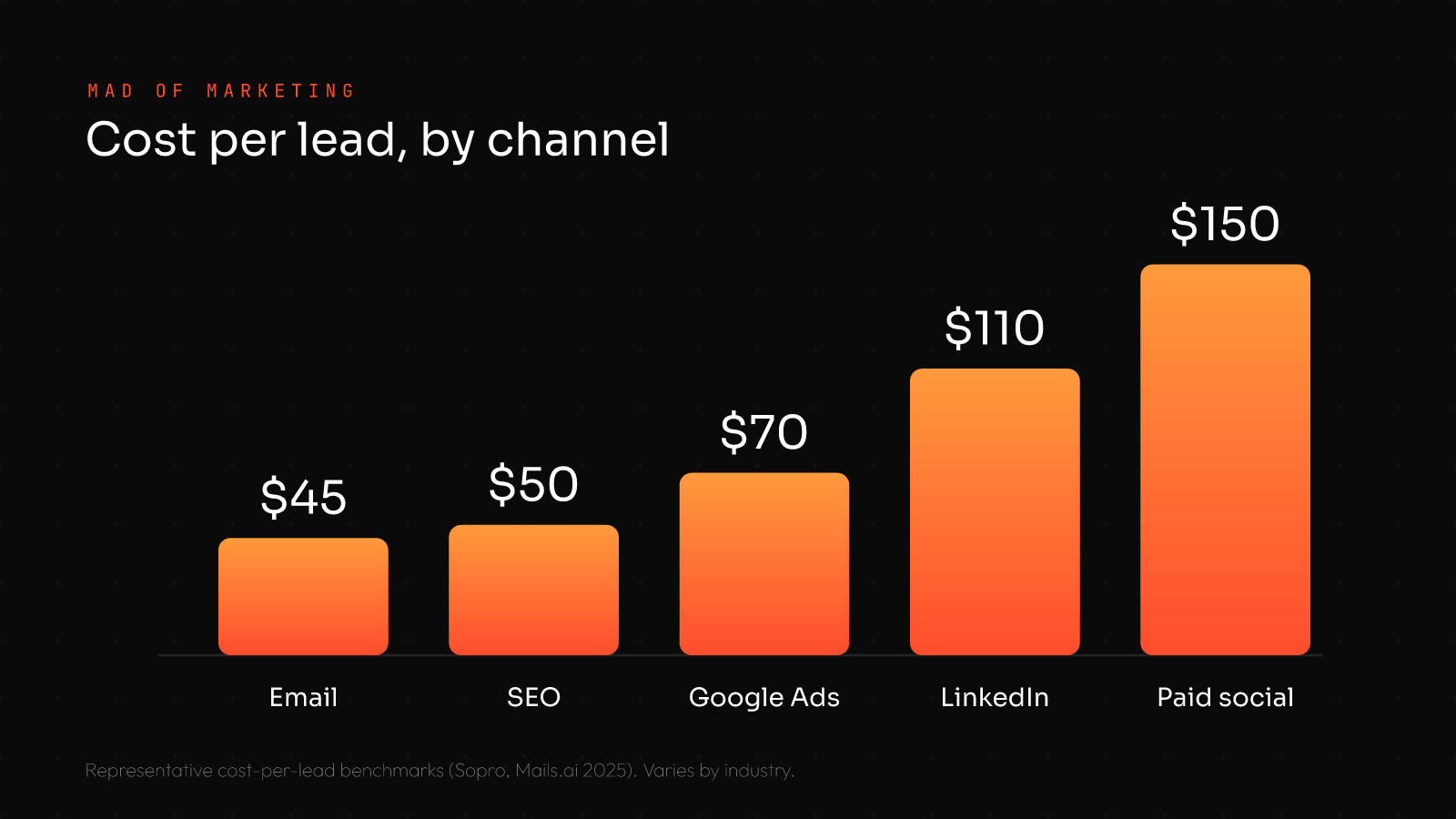
- Email & SEO/content — ~$40–$50 per lead. The cheapest sources, because they’re owned and compound. (See content marketing and email marketing.)
- Google Ads — ~$70 per lead. Higher cost, but fast and high-intent. (See Google Ads for small business.)
- LinkedIn & paid social — ~$110–$150 per lead. Pricier, but powerful for B2B and targeted campaigns.
The average small-business cost per lead lands around $146 overall, and most small businesses generate a few hundred leads a month across channels. The goal isn’t the cheapest lead, it’s the cheapest qualified lead that actually closes.
Speed to lead: the factor most businesses ignore
If you take one thing from this guide, make it this. Response speed is the highest-leverage, lowest-cost improvement in all of lead generation:
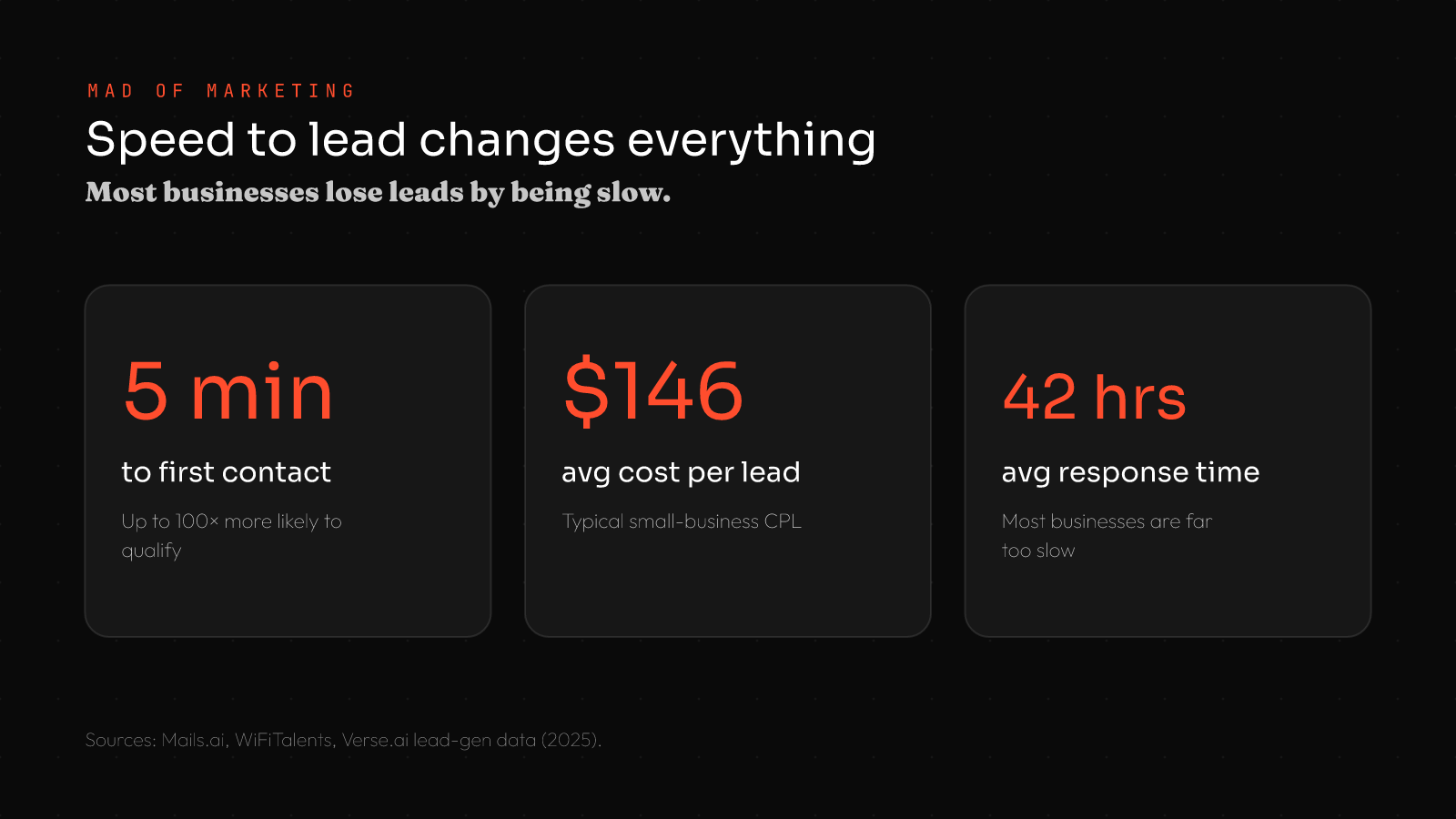
- Leads contacted within 5 minutes are up to 100× more likely to qualify than those contacted after 30 minutes.
- Responding within 1 minute can deliver around 391% better conversion.
- Yet the average response time is 42 hours, and roughly half of qualified leads aren’t followed up within five minutes.
The implication is huge: you can often grow revenue faster by responding to existing leads quickly than by buying more. Speed is nearly free, and almost nobody does it well.
Build a lead generation system in 5 steps
- Pick your channels. Match them to your buyer and budget, usually a mix of an owned channel (SEO/content or email) and a fast one (Google Ads). Don’t spread across everything.
- Create a compelling offer. Give people a reason to raise their hand, a free quote, a consultation, a useful guide, a discount. The offer drives the conversion rate.
- Capture with a frictionless form. Ask for the minimum you need. Every extra field costs you leads. Make calling and messaging one tap on mobile.
- Respond instantly. Set up alerts, auto-replies, and a clear owner so new leads get a human within minutes, not hours. This is the step that prints money.
- Nurture the ones who aren’t ready. Most leads won’t buy today. An automated email sequence keeps you top of mind until they are.
How to qualify leads (so sales isn’t wasted)
More leads aren’t helpful if they’re the wrong leads. A light qualification step, a couple of questions on your form, or a quick discovery call, separates ready-to-buy prospects from browsers.
Focus your fastest, most personal follow-up on the qualified ones, and let automation nurture the rest. This keeps your cost per customer down even when cost per lead varies, and it ties directly into your digital marketing ROI.
Inbound vs outbound lead generation
Lead generation for small business comes in two flavors, and most strong programs blend them:
- Inbound. You attract leads who come to you, through SEO, content, social, and referrals. Inbound leads are cheaper over time, warmer, and compound as your content and reputation grow. The trade-off is that it takes time to build.
- Outbound. You go to the leads, cold email, cold calls, paid ads, direct outreach. Outbound is faster and more controllable, but each lead costs more and tends to be colder.
For most small businesses, the right answer isn’t one or the other. Use outbound (especially paid ads) for immediate leads while you build inbound (content and SEO) for cheaper, compounding ones underneath. Outbound funds the wait; inbound lowers your long-term cost per lead.
Lead magnets that actually work
A lead magnet is the valuable thing you offer in exchange for contact details, and the quality of the magnet largely decides your conversion rate. The best ones solve a specific, immediate problem for your exact buyer:
- Free quote or audit. The strongest magnet for service businesses, it attracts people ready to buy, not just browse.
- Useful checklist or template. Quick to consume, genuinely helpful, easy to say yes to.
- Guide or mini-course. Positions you as the expert while qualifying interest.
- Discount or free trial. Works well for e-commerce and product businesses.
- Webinar or consultation. Higher commitment, but produces highly qualified leads.
Match the magnet to intent: a free quote attracts buyers, while a broad guide attracts researchers who’ll need more nurturing. Both are useful, just route them to the right follow-up.
Tracking and improving lead quality
Not all leads are equal, so measure beyond the count. Track which channels produce leads that actually become customers, not just the cheapest leads, and feed that back into where you spend.
A channel with a higher cost per lead but far better close rate can be your most profitable. This is exactly where lead generation connects to your digital marketing ROI: the goal is the lowest cost per customer, not per lead.
Common lead generation mistakes
- Slow follow-up. The biggest and most common, leads going cold while you “get to them later.”
- Chasing volume over quality. Hundreds of unqualified leads that never close.
- Long, clunky forms. Every extra field drops your conversion rate.
- No nurture. Abandoning the 90% who aren’t ready to buy today.
- No tracking. Not knowing which channel produces leads that actually become customers.
How to nurture leads who aren’t ready to buy
Here’s a number that reframes everything: most leads won’t buy on first contact, but the majority will buy from someone eventually. Nurturing is how you make sure that someone is you. Without it, you spend money generating leads and then quietly let the ones who weren’t ready today disappear.
A good nurture system is mostly automated and genuinely helpful, not pushy:
- Add non-ready leads to an email sequence that educates and builds trust over weeks, drawing on your content.
- Stay useful, not salesy. Answer questions, share results, and remove objections so you’re the obvious choice when timing changes.
- Use light retargeting to stay visible to people who visited but didn’t convert.
- Check in personally with higher-value leads at sensible intervals, a quick, human follow-up beats silence.
Done well, nurturing turns a one-time enquiry into a customer months later at almost no extra acquisition cost, which is why it’s one of the highest-leverage parts of lead generation for small business. Pair fast first response with patient nurture and very few good leads slip away.
How lead generation fits your wider marketing
Lead generation isn’t a standalone tactic, it’s the conversion layer on top of everything else. Your content and local SEO attract attention, your ads drive high-intent traffic, your email nurtures, and lead gen captures and converts the result. Build it into your overall marketing strategy rather than bolting it on.
The lead generation metrics that matter
To improve lead generation you have to measure the right things, not just the count. Watch a handful of numbers each month: cost per lead by channel, lead-to-customer conversion rate (how many actually buy), cost per acquired customer, and your average response time, the metric most businesses never track and the one with the biggest upside.
Together these tell you which channels deserve more budget and where leads are leaking. Pair them with your overall digital marketing ROI and you’ll always know what a lead, and a customer, really costs you.
Frequently asked questions
What is lead generation for small business?
It’s the process of attracting potential customers and capturing their contact details so you can follow up and convert them into paying clients. It bridges marketing and sales, generating interest, then turning it into revenue.
How much does a lead cost for a small business?
The average is around $146, but it varies widely by channel: email and SEO leads can cost $40–$50, Google Ads around $70, and LinkedIn or paid social $110–$150. The cheapest qualified lead that converts matters more than the cheapest lead.
What is the best lead generation channel for small business?
It depends on your buyer, but owned channels, SEO/content and email, produce the cheapest leads over time, while Google Ads delivers fast, high-intent ones. A mix of one owned and one fast channel works best for most.
Why is response time so important in lead generation?
Because leads go cold fast. Contacting a lead within five minutes makes it up to 100× more likely to qualify than waiting 30 minutes, yet most businesses take over 40 hours. Fast follow-up is the cheapest way to convert more of the leads you already have.
The bottom line on lead generation for small business
Lead generation for small business comes down to two things: bring in qualified leads through the right channels, and respond to them faster than your competitors.
Pick a focused channel mix, make a strong offer, capture with a simple form, follow up within minutes, and nurture the rest. The businesses that win aren’t always the ones with the most leads, they’re the ones that answer first.
Want a lead-gen system that captures and converts on autopilot? Book a free strategy call or explore our services.