Branding for small business isn’t a logo, it’s the promise people remember and trust. Consistent branding can lift revenue by around 23%, 81% of consumers need to trust a brand before they buy, and a signature color alone can boost recognition by up to 80%. Branding is what makes all your other marketing work harder.
Most small business owners think branding is something only big companies need, a nice logo, maybe a color scheme, then back to “real” work. That’s a costly misunderstanding. Branding for small business is the difference between being a forgettable option and the name people reach for, recommend, and pay a little more for. It quietly multiplies the return on every ad, post, and email you send.
This guide is part of our wider playbook on digital marketing for small businesses. Here we focus on building a brand that earns trust and recognition.
What is branding for small business?
Branding for small business is the practice of shaping how people perceive your business, through your name, visual identity, voice, and the consistent experience you deliver. Your logo and colors are part of it, but branding runs deeper: it’s the gut feeling people get when they think of you, and the promise they expect you to keep.
Put simply, your brand is your reputation made visible. A strong one tells people who you are, who you’re for, and why you’re the right choice, before you ever say a word in a sales conversation.
Why branding for small business matters
The business case is backed by hard numbers:
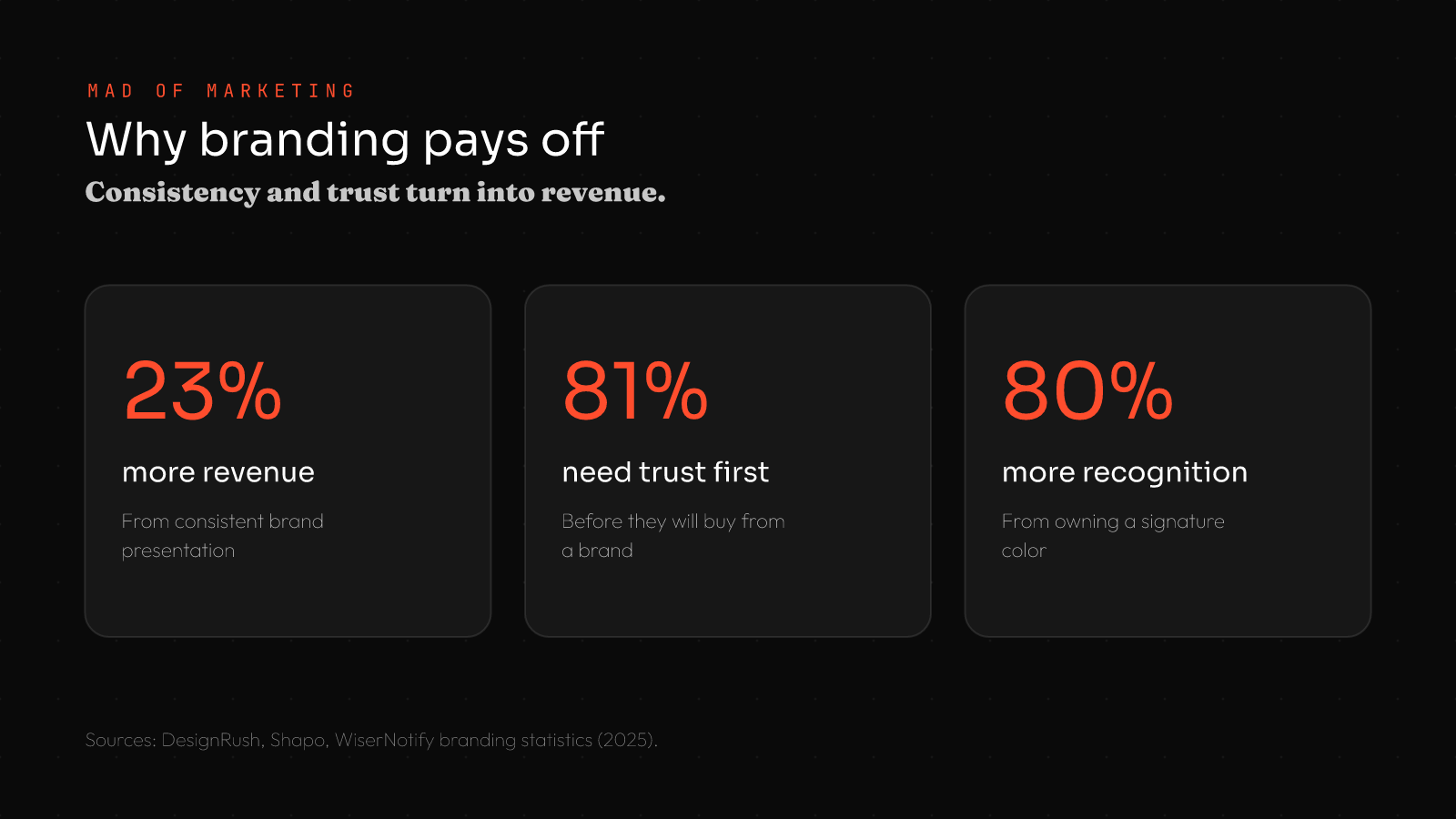
- Consistency drives revenue. Presenting your brand consistently across every touchpoint can increase revenue by around 23%, one of the cheapest growth levers available.
- Trust precedes sales. About 81% of consumers say they need to trust a brand before buying, and many will pay more for a brand they trust.
- Recognition compounds. A signature color can lift brand recognition by up to 80%, and people are far more likely to recall a brand’s color than its name.
- Repetition is required. It takes roughly 5–7 impressions for someone to remember a brand, which only works if what they see stays consistent.
Here’s the practical upshot: branding makes everything else cheaper. A recognized, trusted brand converts ads better, earns clicks in search, and turns first-time buyers into repeat customers, which lifts your overall digital marketing ROI across the board.
The building blocks of a small business brand
A complete brand has more parts than most owners realize. You don’t need all of them polished on day one, but you should know what they are:
- Positioning. Who you serve, the problem you solve, and what makes you different. Everything else flows from this.
- Name and logo. The signature people recognize at a glance.
- Color palette. Your most powerful recognition tool, pick a signature color and own it.
- Typography. The fonts that carry your personality across everything you publish.
- Brand voice. How you sound, friendly, expert, bold, warm. Consistent voice builds familiarity.
- Messaging. Your tagline, value proposition, and the core points you repeat everywhere.
- Visual style. Photography, graphics, and the overall look that ties it together.
How to build your brand in 5 steps
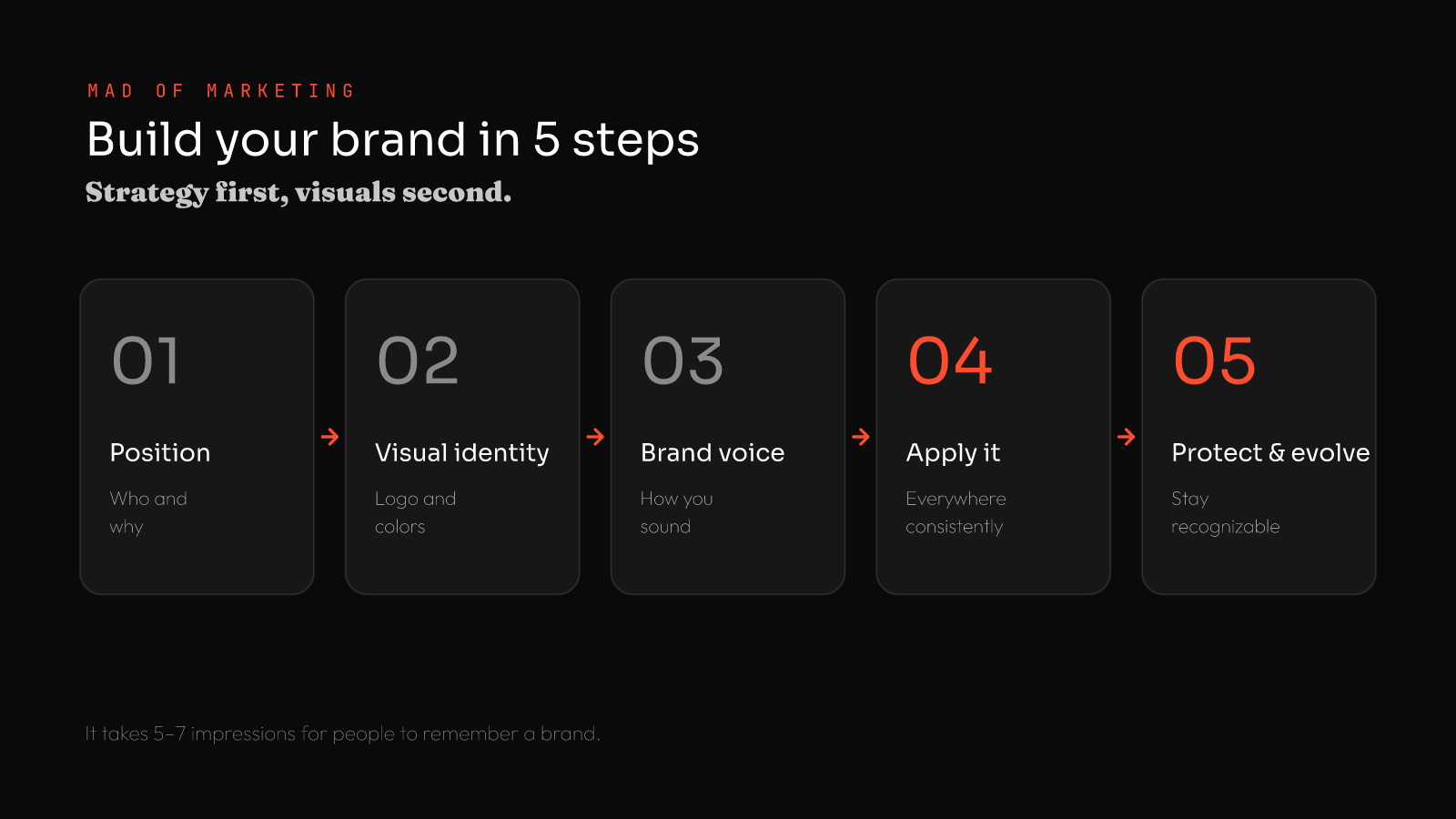
Branding for small business works best when you start with strategy and let the visuals follow, not the other way around. Here’s the order.
1. Nail your positioning
Before any design, answer three questions: who exactly are you for, what problem do you solve, and why should they choose you over alternatives? Write it down in plain language. This positioning is the foundation every visual and message is built on, get it right and the rest gets easier.
2. Create your visual identity
Now design the things people see: a clean, versatile logo, a signature color palette, and consistent typography. Keep it simple and distinctive. Resist the urge to use ten colors and five fonts, restraint is what makes a brand look established rather than amateur.
3. Define your brand voice
Decide how your business sounds in words. Are you the friendly local expert, the bold disruptor, the calm reassuring professional? Pick a voice that fits your audience and use it everywhere, your website, emails, social posts, and even how you answer the phone.
4. Apply it consistently
This is where the 23% revenue lift lives. Use the same logo, colors, voice, and message across every touchpoint, website, social, email, packaging, signage, invoices. A simple one-page brand guide keeps everyone (including future-you) on track. Consistency is what turns scattered impressions into recognition.
5. Protect and evolve it
Once your brand is working, guard it, don’t redesign on a whim. Brands gain power through repetition, so let it build. Evolve deliberately as your business grows, refreshing rather than reinventing, so you keep the recognition you’ve earned.
Brand strategy vs brand identity
Two terms get muddled, so it’s worth separating them. Brand strategy is the thinking, your positioning, audience, personality, and promise. Brand identity is the expression of that thinking, the logo, colors, typography, and visuals people actually see.
The mistake most small businesses make is jumping straight to identity (picking a logo) without strategy (deciding what they stand for). The result is a pretty logo attached to a fuzzy business. Always do the strategy first; it’s what makes the identity meaningful instead of decorative, and it’s what keeps every future design decision consistent.
Common small business branding mistakes
- Thinking branding equals a logo. The logo is one piece; positioning, voice, and consistency matter more.
- Inconsistency. Different colors, tones, and messages everywhere, the fastest way to look unprofessional and forgettable.
- Copying competitors. Blending in defeats the purpose. Branding is about standing out.
- Constant rebranding. Changing your look every few months resets the recognition you’re trying to build.
- Skipping strategy. Jumping to design before defining who you are and who you’re for.
How branding shapes customer experience
Your brand isn’t just what people see before they buy, it’s every interaction after, too. The way you answer the phone, package an order, reply to a complaint, and follow up all either reinforce or undermine the promise your visuals make.
This is where small businesses actually have an advantage over big ones: you can deliver a personal, consistent experience that giant competitors can’t. When the experience matches the brand promise, trust deepens, customers come back, and they tell others, which is the cheapest, most powerful marketing there is.
A polished logo with a sloppy experience, on the other hand, breaks trust fast. Treat every touchpoint as part of the brand, not just the marketing.
How much does branding cost for a small business?
Branding spans a huge range. A solo startup might begin with a clean DIY logo and a defined color palette for very little, while a professional brand identity from an agency, strategy, logo system, guidelines, and assets, typically runs from a few thousand dollars up, as a one-time investment.
The key is that branding is foundational: it makes every other marketing dollar work harder, so it’s rarely the place to cut deepest. For where it fits your wider budget, see how much digital marketing costs.
When should a small business rebrand?
Rebranding is powerful but overused, and done carelessly it throws away hard-won recognition. There are good reasons to do it: your business has outgrown its original positioning, your look is genuinely dated or inconsistent, you’re targeting a new audience, or your name no longer fits what you sell.
There are also bad reasons: boredom, a new decision-maker wanting to leave a mark, or chasing a trend. When you do rebrand, evolve rather than erase, keep the equity people already recognize and refresh around it.
And roll it out consistently and all at once, not in a scattered drip that confuses customers. If you’re rebranding more than once every few years, the problem usually isn’t the brand; it’s the strategy underneath it.
How branding connects to the rest of your marketing
Branding isn’t a standalone project, it’s the layer that makes everything else perform. A consistent brand makes your website more convincing, your content more memorable, and your ads more trusted.
It should be defined early in your marketing strategy, because every channel you run will either build or blur it. Strong branding turns one-off customers into loyal ones, and loyal customers are the cheapest growth there is.
Should you DIY your branding or hire a designer?
Both paths are valid; the right one depends on your stage and budget. DIY makes sense very early, when cash is tight and you mainly need a clean logo, a defined color palette, and clear positioning, modern tools make a tidy starting identity achievable for little. The risk is ending up with something generic or inconsistent that you outgrow quickly.
Hiring a designer or agency earns its keep when branding will carry real weight, when you’re competing in a crowded market, raising your prices, or scaling.
Professionals bring strategy, not just aesthetics: they translate who you are into a distinctive identity and a guide that keeps everything consistent as you grow.
A sensible middle path is to start DIY to get moving, then invest in professional branding for small business once the business proves itself and the stakes, and the payoff, get bigger. Whichever you choose, the non-negotiable is consistency once the direction is set.
Frequently asked questions
What is branding for small business?
It’s shaping how people perceive your business through your positioning, name, visual identity, voice, and consistent experience. It’s your reputation made visible, the promise customers expect you to keep, not just a logo.
Why is branding important for a small business?
Because it builds trust and recognition, which drive sales. Consistent branding can lift revenue by around 23%, 81% of consumers need to trust a brand before buying, and recognition makes all your other marketing convert better.
How much does branding cost for a small business?
It ranges widely, from a modest DIY setup to several thousand dollars for a professional brand identity from an agency. It’s a foundational, mostly one-time investment that makes every future marketing dollar more effective.
What’s the difference between a brand and a logo?
A logo is a visual mark; a brand is the entire perception people have of your business, its positioning, voice, look, and the trust it earns. The logo represents the brand, but it isn’t the brand itself.
How long does it take to build a brand?
Defining your identity can take a few weeks, but recognition builds over time, it takes roughly 5–7 impressions for people to remember a brand. Consistency over months and years is what turns a new identity into a trusted, recognizable brand.
The bottom line on branding for small business
Branding for small business is the multiplier behind everything else you do. Define who you are and who you’re for, build a simple distinctive identity and voice, and above all, apply it consistently everywhere. Do that and you’ll earn the trust and recognition that turn marketing spend into loyal customers and a meaningful revenue edge over the businesses that never bothered.
Want a brand that makes your business unmistakable? Book a free strategy call or explore our services.